


Services online · Subscriptions and bookings
Subscriptions, packages and bookings are three different workflows
Subscriptions, packages and bookings on your website: how to separate payment, service entitlement and available time, and show the rules upfront.
Alphabite · Ecommerce design and development team ·
Updated:
A subscription, a package and a booking are three different things — a subscription gives access or a service for a period, a package gives a set number of services, and a booking reserves a specific time. One website can sell them together, but it must track payment, remaining entitlement and the calendar separately and show cancellation and renewal rules before payment.
What is the difference between a subscription, a package and a booking?
A four-consultation package can be paid upfront and used over time. A subscription may provide a service for a period. A booking reserves a specific time. Buying a package does not automatically reserve an appointment, and a subscription does not necessarily mean automatic card charging. One offer can combine all three, but the system must track them separately.
| Record | Question it answers |
|---|---|
| Payment | Has the amount been paid, failed or refunded? |
| Service entitlement | What can the customer use, and how much of the package remains? |
| Booking | Which time and specialist are reserved? |
Which model fits your service?
Start with the model that matches how you actually deliver the service. Combinations make sense when their rules are clear to both the customer and your team.
| Model | Fits when | Example |
|---|---|---|
| Single booking | The customer buys one session or service. | A first consultation |
| Package | The result needs several sessions used over time. | Four consultations with a set validity |
| Subscription | The customer gets access or a service for a period. | A monthly programme with materials |
| Combination | The programme has a period and included sessions. | A subscription with a set number of bookings |
Models for selling services
Single booking
- Fits when
- The customer buys one session or service.
- Example
- A first consultation
Package
- Fits when
- The result needs several sessions used over time.
- Example
- Four consultations with a set validity
Subscription
- Fits when
- The customer gets access or a service for a period.
- Example
- A monthly programme with materials
Combination
- Fits when
- The programme has a period and included sessions.
- Example
- A subscription with a set number of bookings
What happens when a customer reschedules or cancels?
A customer buys four consultations, books one and then wants to move it. Define when a session is deducted, whether a late cancellation uses it and who can make an exception. A refunded payment must not quietly leave a booking active.
With a calendar connection, it must also be clear where availability comes from. Check time zones, absences and simultaneous attempts for the same slot. An integration logo does not prove these cases are handled.
Describe no-shows as well: if the customer does not attend, is the session used, can it be transferred and who decides? These rules should be the same on the website, in the confirmation and in conversations with your team.
Automatic billing or payment per period?
“Subscription” can mean two different things: the customer pays once for a set period and renews manually, or their card is charged automatically every period. The second requires a payment provider that supports recurring billing, clear customer consent and an easy way to cancel. Stripe, for example, describes recurring billing as a separate capability; a “subscription” label alone does not connect payments.
Also decide what happens when a renewal fails: does access stop immediately, is there extra time to pay and how is the customer notified?
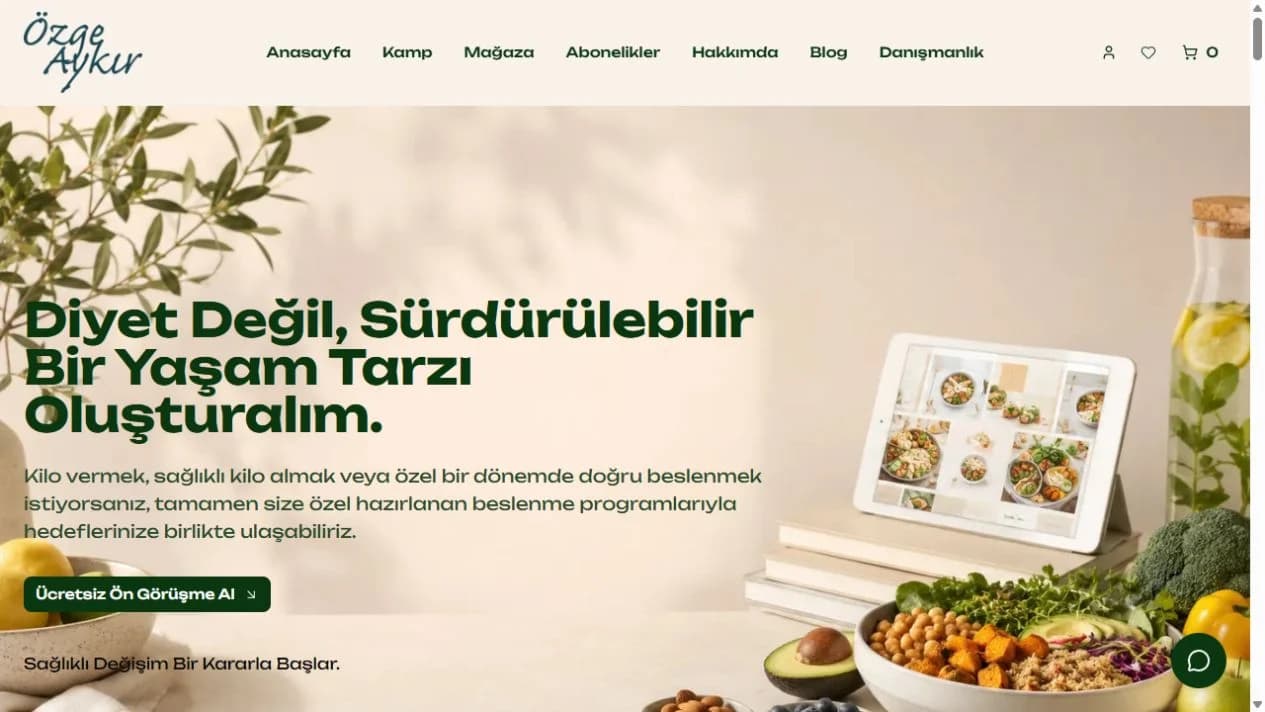
Example: Özge Aykır — packages, subscriptions and appointments
Our work for dietitian Özge Aykır includes packages, subscriptions and bookings on her business website, with calendar synchronisation. It shows why the sales flow should follow how the service is delivered. For a new project, the billing method is defined separately from package and appointment rules.


What should customers know before paying?
State what is included, how long it is valid, how to book and how changes work. If the offer renews automatically, say so clearly next to the payment button, together with how to cancel.
When selling to consumers, the right of withdrawal for services and digital content has its own specifics, for example when a service starts within the withdrawal period. Check them with a lawyer before publishing your terms.
Frequently asked questions
What is the difference between a subscription and a package?
A subscription gives access or a service for a set period, while a package gives a set number of services used over time. One offer can combine both, but the system must track them separately.
Does buying a package automatically book an appointment?
No. A package gives an entitlement to a service, while a booking reserves a specific time and specialist. The customer chooses a time separately, and the session is deducted from the package under the agreed rules.
Does a subscription require automatic card billing?
Not always. A subscription can be paid per period and renewed manually. Automatic billing requires a payment provider that supports recurring payments, clear customer consent and rules for failed payments.
How do I prevent double bookings for the same time slot?
Availability should come from one source, and a slot should be confirmed only if it is still free. With an external calendar connection, check time zones, absences and simultaneous attempts for the same slot.
Can one website sell packages, subscriptions and bookings together?
Yes. Alphabite’s work for dietitian Özge Aykır includes packages, subscriptions and appointment booking with calendar synchronisation. Payment, service entitlement and booking should be tracked as separate records.